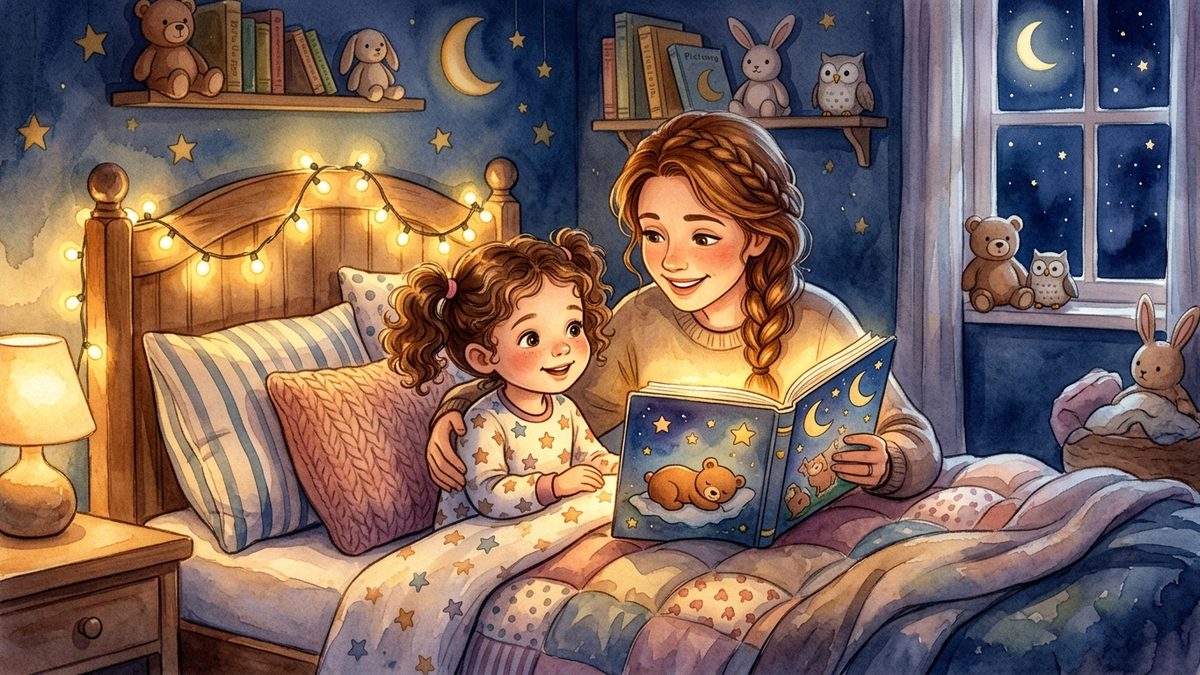
In a modern home overflowing with flashing battery-operated toys, singing plastic devices, and ambient television screens, a child's sensory nervous system is under near-constant bombardment. When children feel overwhelmed, their play often becomes frantic, unfocused, and easily dysregulated.
Creating a dedicated calm reading corner is one of the most effective, research-backed ways to give your child an emotional sanctuary. Far more than an aesthetic interior design project, a reading nook functions as an external neurological regulator—a designated space that signals comfort, focus, and quiet contemplation.
Here is what environmental psychology and child development research tell us about designing an inviting reading nook, along with a step-by-step setup blueprint you can build this weekend.
"Children do not learn to self-regulate through lectures or reprimands; they learn through their sensory environment and emotional safety. A calm, low-stimulation reading nook acts as a physical external anchor for their internal nervous system."
— Dr. Laura Markham, Founding Clinical Psychologist of Aha! Parenting
Increase in self-initiated reading when books are displayed front-facing in child-accessible nooks
vs. traditional spine-out adult bookshelves
The Neurobiology of Sensory Micro-Environments #
Toddlers and preschoolers are sensory learners. Their developing brains are uniquely sensitive to spatial cues, visual clutter, and lighting temperatures:
- Visual Overload Reduces Choice Confidence: When children face towering shelves packed with hundreds of toy boxes and spine-facing books, cognitive fatigue sets in. Front-facing displays with 4 to 6 curated books allow them to choose independently without decision paralysis.
- Proprioceptive Containment: Children instinctively seek out "dens"—under tables, inside boxes, or tucked between cushions. Boundaries in physical space help ground their proprioceptive system, lowering cortisol and physical restlessness.
- Lighting & Circadian Signaling: Fluorescent overhead lighting triggers adrenaline and hyperactive pacing. Soft, warm-spectrum lighting (under 2700K) activates calming alpha brainwaves.
Sturdy Warmth: Setting Boundaries for the Reading Nook #
A reading nook works best when it has a clear, respectful purpose. Parents often wonder whether to make the space strictly educational or completely open-ended:
| Approach | Philosophy | Result |
|---|---|---|
| Permissive | Nook becomes a dumping ground for half-eaten snacks, toys, and iPads | Child stops associating the space with calm reading |
| Authoritarian | Forces child to sit in nook as a "timeout" or mandatory study chore | Child develops resentment and avoids books altogether |
| Sturdy Warmth (Balanced) | Nook is an inviting haven protected by gentle, consistent rules | Child voluntarily retreats there to recharge and read |
As Dr. Becky Kennedy emphasizes, children cherish spaces where clear boundaries protect their calm: "This cozy corner is our special quiet spot for books, cuddles, and rest. Toys have their home in the bin, and books have their home right here."
The 4-Step Blueprint to Build a Reading Nook #
You don't need a spare bedroom or a large budget to create a magical reading sanctuary. Follow this practical, closed-ended blueprint:
Step 1: Identify the Location #
Find a quiet alcove shielded from television glare and high-traffic hallways. Ideal spots include:
- The corner between a wardrobe and bedroom wall.
- The under-stair landing or a bay window alcove.
- A quiet corner of the living room defined by an area rug.
Step 2: Establish Cozy Proprioceptive Seating #
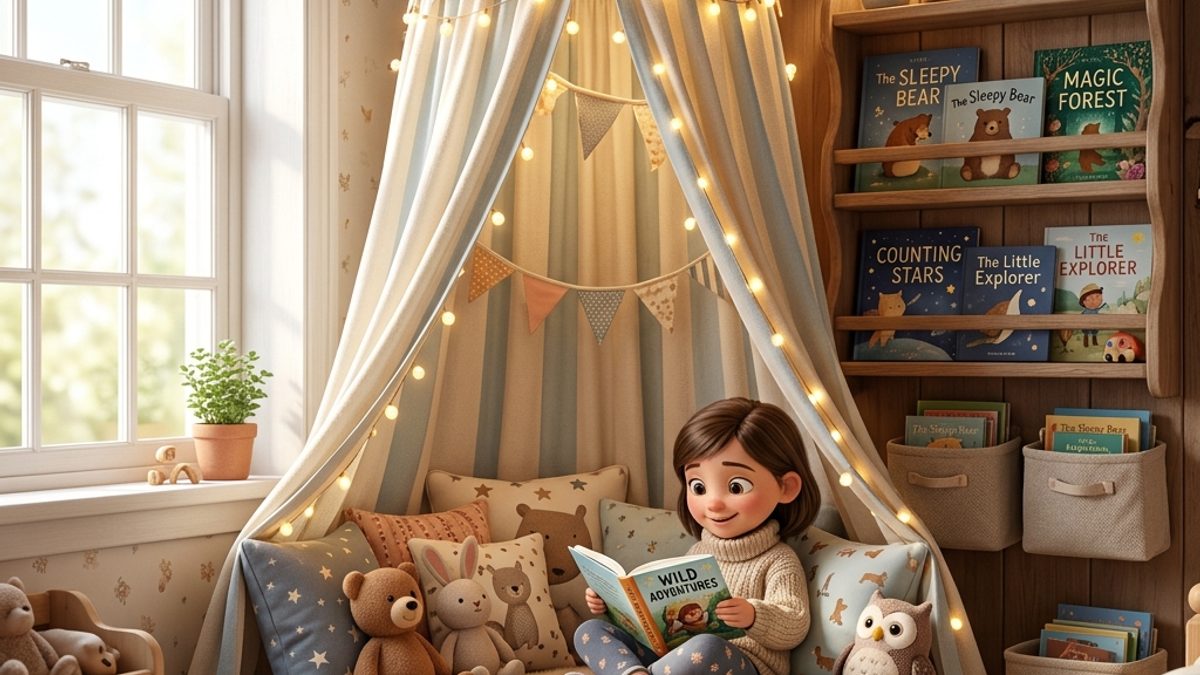
Layer soft textures to invite lingering. Use a thick faux-fur rug, a low bean bag chair, or oversized floor cushions. Adding a plush weighted blanket or a couple of soft stuffed animal reading companions provides comforting physical pressure that active children find deeply soothing.
Step 3: Mount Front-Facing Ledges (The Montessori Method) #
Install low, child-height picture ledges. Rotate just 5 to 6 titles each week:
- Place visually striking picture books cover-out.
- Feature books that reflect current developmental themes, such as stories about bedtime calm or managing big feelings.
- Keep books within your child's reach so they never need adult permission to open an adventure.
Step 4: Warm Illumination & Digital Boundaries #
- Use a gentle 5-watt warm-amber lamp or drape child-safe fairy lights around a canopy.
- If including digital read-along books, ensure the tablet is dedicated to reading only (airplane mode on, notifications silenced) or use Fabella's immersive audio storybooks with soothing voice narration.
Bringing Stories to Life in Your New Nook #
A peaceful reading corner is only as magical as the adventures it holds. Whether exploring rich paper illustrations or listening to peaceful, narrated audio adventures, your child will cherish having a sanctuary made just for them.
Explore our Free Library of Interactive 3D Storybooks today to discover heartwarming tales to feature on your child's reading shelf tonight!