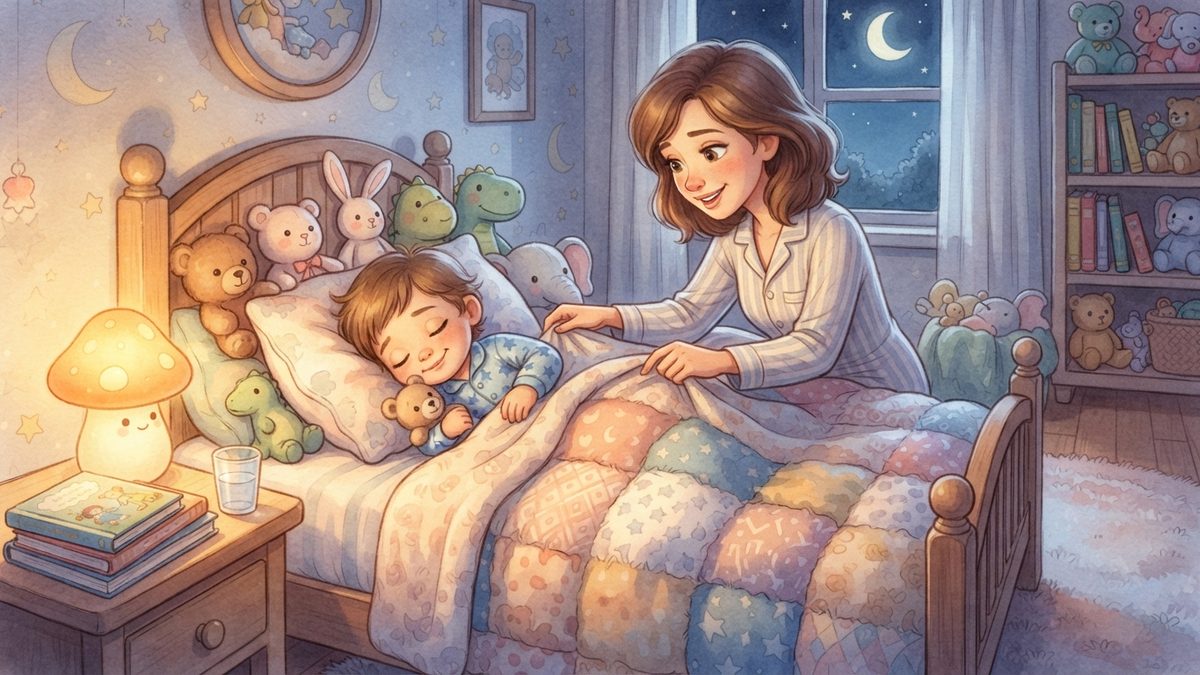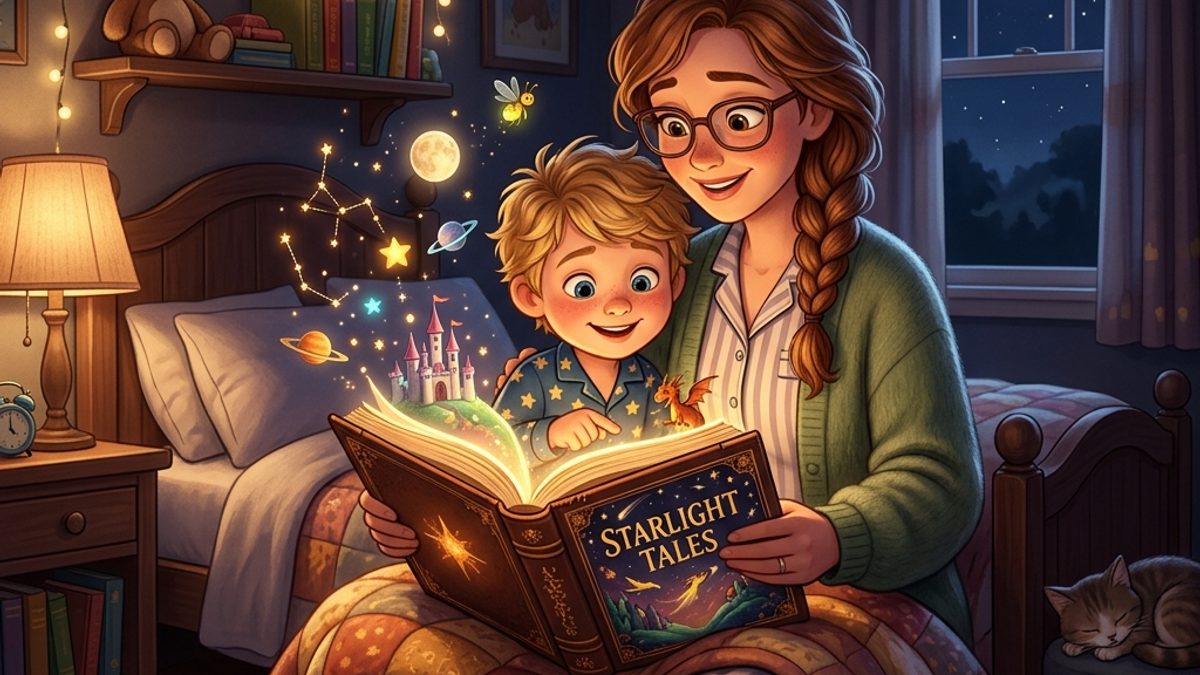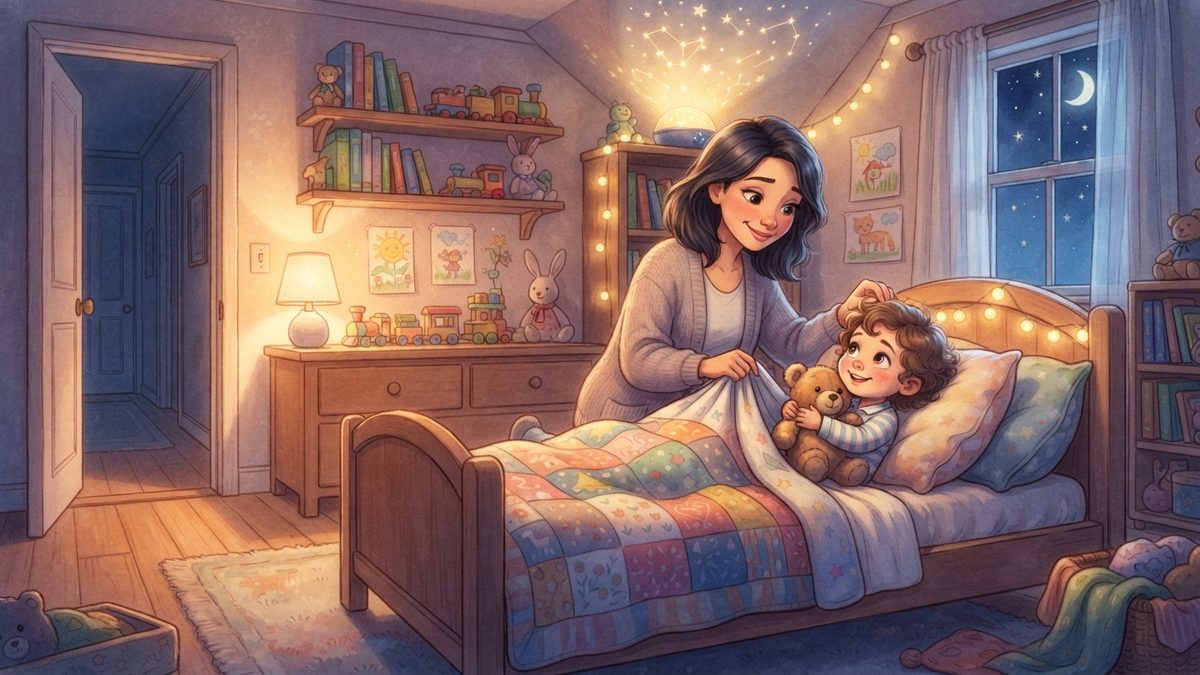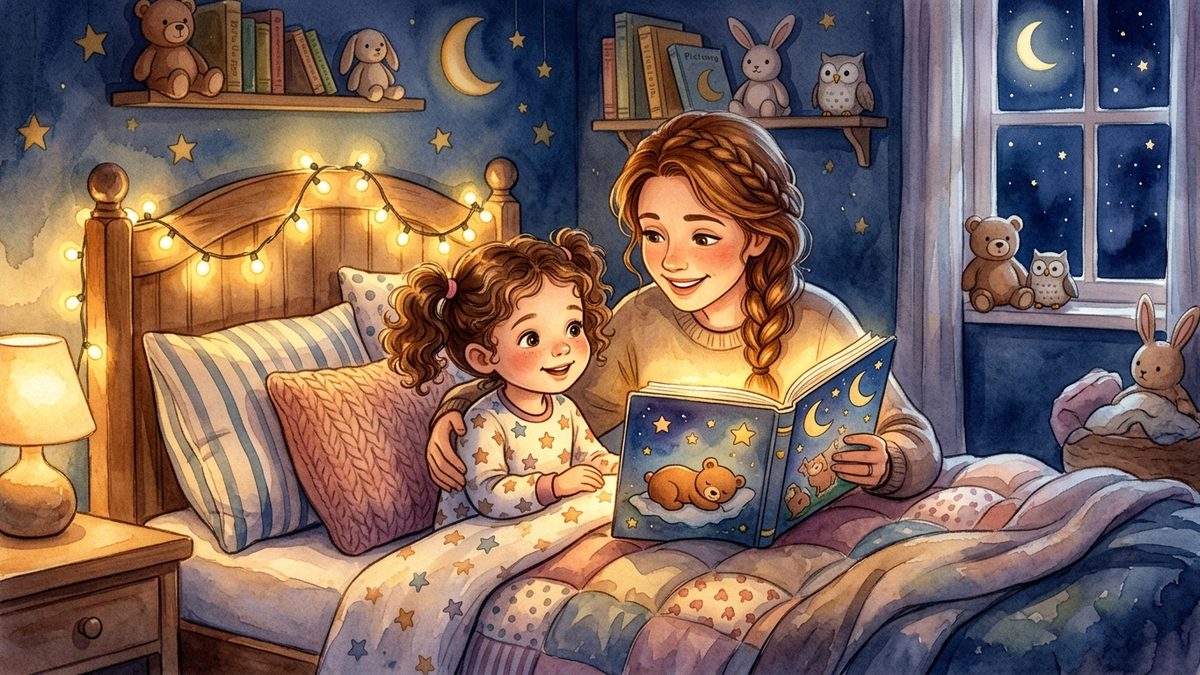
At age four, bedtime can feel like a high-stakes negotiation. Between imaginative stall tactics, sudden requests for water, and fierce debates over "just one more chapter," parents often find their peaceful evening dissolving into an hour-long battle of wills.
Four-year-olds are in a remarkable cognitive transition. Their language is flourishing, their imaginations are exploding, and their drive for autonomy is at an all-time peak. When the bedroom door begins to close, their developing nervous systems often perceive sleep as a sudden drop in connection and stimulation.
Fortunately, pediatric sleep science and child development research offer a predictable, low-friction blueprint. By combining authoritative sturdy warmth with a structured reading ritual, you can turn evening resistance into a comforting anchor your child looks forward to every night.
"Children don't need us to be rigid wardens, nor do they feel safe when we are pushovers. Sturdy parenting means holding two truths at once: validating the emotional struggle of bedtime while calmly, consistently holding the boundary."
— Dr. Becky Kennedy, Clinical Psychologist and Author of Good Inside
Faster sleep onset latency in 4-year-olds with consistent bedtime reading
vs. irregular routines resulting in 43+ min average settling delay
The Developmental Science: Why 4-Year-Olds Resist Sleep #
Four is the classic age of "curtain calls" and bedtime defiance. Understanding the underlying neurobiology helps parents shift from reactive frustration to grounded leadership:
- Active Prefrontal Cortex Remodeling: Four-year-olds process the entire day's sensory input right before sleep. Without a predictable sensory downshift, their nervous system remains in high beta brainwave activity.
- Emergence of Vivid Imagination & Fear: Between 48 and 60 months, children develop complex narrative imagination. The dark room can suddenly harbor monsters, shadows, and separation worries.
- The Autonomy Drive: Unlike toddlers who melt down in raw dysregulation, four-year-olds negotiate with sophisticated linguistic arguments. If limits are porous, they will naturally keep testing them.
Permissive vs. Authoritarian vs. Sturdy Warmth #
Most bedtime routines fail because parents drift between two unhelpful extremes: permissive parenting (giving in to 5 extra stories out of exhaustion) or authoritarian parenting (barking orders, slamming doors, or threatening punishments).
The proven middle ground is authoritative "sturdy warmth":
| Dimension | Permissive (Soft) | Authoritarian (Hard) | Sturdy Warmth (Balanced & Effective) |
|---|---|---|---|
| Book Selection | Child demands 6 books; parent surrenders | Parent demands books child dislikes | Parent offers 2 pre-selected choices; child decides |
| "One More Story!" | Parent sighs and reads until 9:30 PM | Parent yells, "Go to sleep or no toys tomorrow!" | Empathetic & firm: "I know how much you love this story, and our reading time is finished. Lights out." |
| Sensory Atmosphere | Background TV or iPad playing | Total silence with punitive isolation | Warm dim lighting, calming narrated voice, gentle cuddling |
| Night Exit | Parent lies in bed until midnight | Lock or gate with emotional coldness | Calm, low-energy neutral return to bed without debate |
The 4-Step Bedtime Reading Sequence #
To eliminate friction, follow this closed-ended sequence every night starting at 7:30 PM:
Step 1: Preemptive "Last Call" (7:30 PM) #
Before opening any book, eliminate every potential stall tactic in advance.
- Final bathroom visit.
- Exactly half a cup of water.
- Comfort check (blanket straight, pajamas comfortable, favorite stuffed animal placed).
- Announce the boundary clearly: "Last Call is done! Now we have our special reading time together, and after that, our bodies rest."
Step 2: The Two-Book Choice (7:45 PM) #
Offer genuine autonomy within controlled limits. Lay out exactly two books (or open two selected stories in your digital library) and let your child choose which one to read first:
- "Would you like to read about Maeve's messy adventure or the sleepy little bear tonight?"
- Once chosen, state the rule cheerfully: "We are reading these two stories, and when the last page turns, the lamp turns off."
Step 3: Immersive, Low-Stimulation Storytelling (8:00 PM) #
Four-year-olds thrive when stories bridge visual interest with auditory rhythm. Reading with exaggerated calmness down-regulates their vagal tone and slows their breathing.
- If your voice is tired after a long workday, Fabella's voice-narrated storybooks provide soothing, professional human-like narration paired with interactive page turns that keep their eyes focused without blue-light gaming arousal.
- Ask one gentle connection question mid-story: "Look at the little fox curling up in the moss. How cozy does that look?"
Step 4: The Closed-Ended Closing Script (8:15 PM) #
When the story ends, do not ask open-ended questions like "Are you ready for sleep?" (they will always say no).
Instead, deliver a predictable, reassuring script:
"The book is closed, and our special reading time is finished. I love you so much, I am right outside your door keeping you safe, and it is time for your body to rest. See you in the morning light."
If they protest, validate the feeling while holding the boundary without wavering:
"I hear you, sweetheart. You wish we could read all night because stories are so fun. AND it is time to sleep. Goodnight."
How Fabella Supports Healthy Bedtime Routines #
Bedtime reading should build bonds, not stress. The Fabella interactive story library is designed specifically to support early childhood developmental windows:
- Fixed Story Arcs: Gentle 7 to 10-minute narratives that guide children from engagement to calm sleepy rhythms.
- Warm Watercolor Artistry: Soft, peaceful illustrations that protect developing eyes from harsh cartoon flicker.
- Synchronized Audio Narration: Allows parents to cuddle their 4-year-old hands-free while a soothing voice reads along.
Give your four-year-old the safety of consistent boundaries and the magic of bedtime stories tonight. Explore our interactive story library to find tonight's peaceful wind-down adventure.