"You can't play with us today."
"If you invite Sarah to your birthday party, you can't be in our group."
Unlike the bruised knees or scraped elbows of physical bullying, covert social exclusion leaves invisible marks. Recognizing and addressing relational aggression in elementary school is one of the most pressing challenges parents face today. Because these subtle behaviors—whisper campaigns, covert cliques, eye-rolling, and conditional friendships—rarely violate zero-tolerance school rules, teachers routinely overlook them in busy classrooms and loud playgrounds.
When left unaddressed, covert ostracism impacts a child's developing nervous system just as deeply as physical intimidation. Equipping your child requires moving past passive reassurance and using actionable, research-grounded emotional coaching.
Elementary students routinely targeted by covert relational aggression
vs. 22% experiencing overt physical aggression on school playgrounds
The Neurobiology of Social Exclusion: Why Words Physically Hurt #
Relational aggression is not a harmless rite of passage. When a child experiences social rejection, their brain processes the event through specific neurological pain pathways.
Neuroimaging research from UCLA reveals that peer exclusion directly activates the dorsal anterior cingulate cortex (dACC) and anterior insula. These are the exact same neural structures that register physical pain.
When your child says, "My stomach hurts before recess," they are reporting an authentic somatic reaction. Chronic social alienation triggers a sustained release of cortisol from the hypothalamic-pituitary-adrenal (HPA) axis, keeping young nervous systems in a prolonged state of hyper-vigilance.
Young children lack the prefrontal cortex maturity to logically process social manipulation. Without direct parental coaching, they often internalize exclusion, believing they are fundamentally broken or unlikable.
Spotting Relational Aggression in Elementary School: 4 Covert Signs #
Because relational aggression thrives on subtlety, children rarely report it directly using words like "bullying." Instead, watch for these four distinct behavioral markers:
1. Somatic Complaints and School Avoidance #
If your child consistently develops headaches, stomachaches, or nausea on Sunday evenings or weekday mornings, assess their playground dynamics. These physical symptoms often reflect anticipatory social stress rather than illness.
2. Sudden "Friendship Whiplash" #
One afternoon your child is inseparable from a peer; the next, they are entirely banished from the circle with no clear explanation. A pattern of high-intensity, conditional friendships is a hallmark of covert peer hierarchies.
3. After-School Emotional Volatility #
Children who spend six hours suppressing stress in exclusionary classrooms often release their pent-up emotional overwhelm the moment they enter a safe home environment. If your child breaks down over minor evening frustrations, review our guide on Daycare Restraint Collapse: Calming After-School Meltdowns.
4. Self-Silencing and Social Minimization #
You may notice your child discarding their favorite accessories, changing their speech patterns, or downplaying their achievements. Children often alter their identities to appease dominant peer gatekeepers.
The Sturdy Parenting Approach: Balancing High Warmth with Firm Boundaries #
When parents discover their child is facing relational aggression, they often swing between two unhelpful extremes: permissive minimization ("Just ignore them and play with someone else") or authoritarian reactivity ("I'm calling the principal and confronting that child's mother immediately").
Effective emotional scaffolding relies on Sturdy Parenting: offering deep emotional attunement while establishing clear, empowered boundaries.
"When a child is navigating relational pain, our job is not to fix the playground dynamic instantly. Our job is to be an unshakeable emotional anchor. Connection must precede coaching: first validate their internal experience, then build their boundary-setting capacity."
— Dr. Daniel Siegel & Dr. Tina Payne Bryson, Authors of The Whole-Brain Child
| Challenge Scenario | Permissive Approach (Soft) | Authoritarian Approach (Hard) | Balanced Sturdy Solution (Authoritative) |
|---|---|---|---|
| "You can't sit with us at lunch." | "Don't worry honey, those kids aren't nice anyway. Just sit alone and read." | "Tell them they are mean bullies and you're going to get them in trouble!" | "It stings to be shut out. You deserve a seat where you are welcomed. Let's find one genuine friend to walk into lunch with tomorrow." |
| Conditional Demands ("Give me your snack or we aren't friends.") | "Just share your snack so you can keep your friends happy." | "Nobody takes your things! Yell at them to back off!" | "Real friendship is never a trade. You can keep your snack AND keep your boundaries. Let's practice what to say." |
| Whisper Campaigns & Rumors | "Just be extra nice to everyone and they will see the truth." | "I am marching up to the school office right this second." | "Lies feel heavy and unfair. We will talk with your teacher about class safety, and at home, we hold on to who you really are." |
The 4-Step De-Escalation and Coaching Protocol (Implement Tonight) #
When your child comes home carrying the sting of relational exclusion, use this exact 4-step sequence to regulate their nervous system and build actionable social resilience.
Step 1: Somatic Decompression (Arrival to 4:30 PM) #
Do not interrogate your child the moment they get into the car or walk through the door. Provide sensory grounding first: a warm protein snack, physical hydration, and 15 minutes of quiet presence. Cortisol levels must drop before cognitive problem-solving can begin.
Step 2: Emotional Labeling Without Interruption #
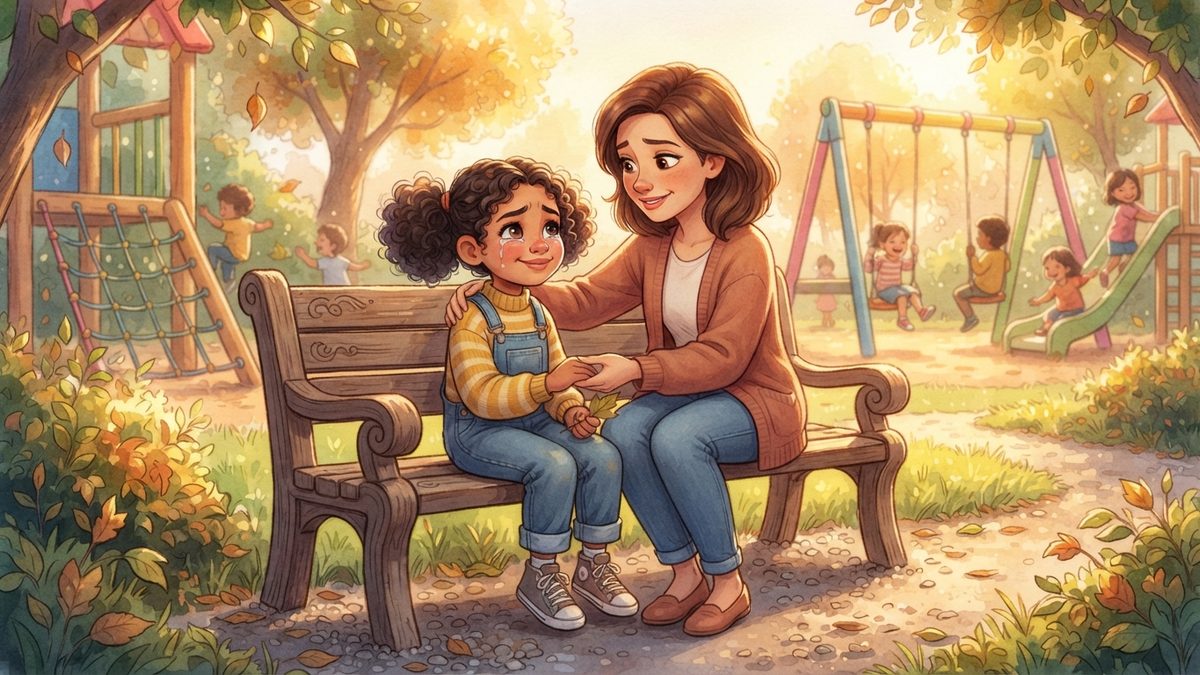
When your child opens up, avoid jumping straight into solution mode. Reflect their emotion accurately using steady, grounded warmth.
- Say this: "That feels so lonely. It makes complete sense that your heart and stomach hurt when that happened. I am right here with you."
- Avoid this: "Why didn't you just tell the recess monitor?"
Step 3: Scripting the 3-Second Playground Boundary #
Equip your child with short, neutral, unshakeable responses. Relational aggressors look for visible emotional collapse or pleading. Neutral clarity shuts down the dynamic quickly.
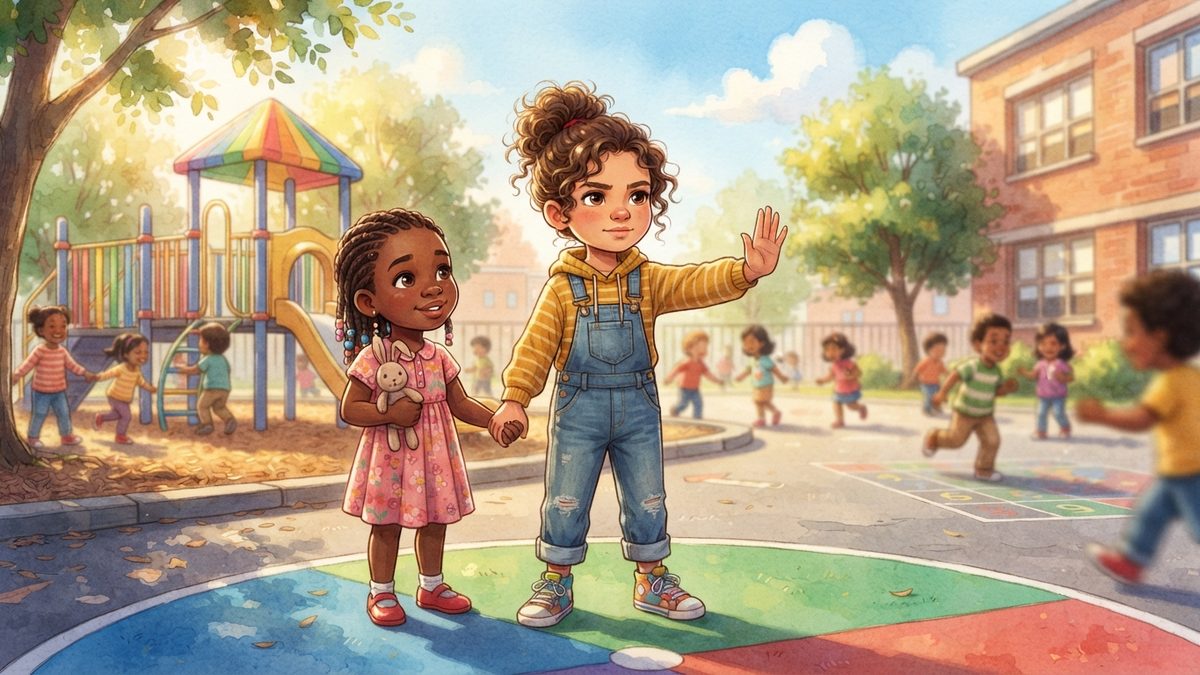
- When excluded from a game: Teach them to look the peer in the eye, keep their hands relaxed, and say:
"Alright. I'm going to play four-square with Liam." (Then turn and walk toward another activity without lingering). - When faced with conditional threats ("You can't be my friend if..."):
"I don't make deals to be friends. Let me know when you're ready to play fairly." - When encountering whisper circles:
"If you have something to tell me, you can say it directly."
If your child struggles with standing their ground against persistent behavior, review our practical guide on How to Counsel a Bullied Child: 5 Practical Scripts.
Step 4: Social Re-Anchoring Through Bibliotherapy #
Shift your child's focus away from playground social politics and anchor them in safe, positive connections. Pair one-on-one time with high-quality stories that model empathy, assertiveness, and moral courage.
Using interactive storytelling tools like Fabella, parents can customize narrative journeys where characters navigate peer pressure, set assertive boundaries, and discover true friendship. Experiencing social-emotional themes through voice-narrated, low-stimulation digital stories helps children rehearse difficult real-world situations in a secure environment.
Action Plan for School Collaboration: How to Involve Teachers #
Because relational aggression is covert, partnering with school staff requires an objective, evidence-based approach rather than emotional accusations.
- Keep an Objective Log: Document dates, specific peer names, locations (e.g., cafeteria table 4, soccer field), and direct quotes reported by your child.
- Focus on Supervision Gaps: Approach educators collaboratively: "We are working on social assertiveness at home, but we've noticed consistent exclusion happening during line-up and unmonitored recess transitions. Can we establish a designated playground buddy or structured recess activity?"
- Request Assigned Seating Adjustments: If exclusive cliques dominate specific lunch tables, ask the teacher to implement rotational or assigned lunch seating to break up exclusionary cliques.
Raising a Grounded, Resilient Child #
Guiding a child through peer exclusion is not about insulating them from every social challenge. It is about proving to them that their worth is never determined by a playground clique.
By providing steady validation, practicing clear boundary scripts, and reinforcing their identity through meaningful stories at home, you transform a painful social experience into lifelong emotional resilience.
Key Takeaways for Parents #
- Relational aggression is neurological pain: Treat social exclusion with the same seriousness as physical injury.
- Prioritize attunement over instant fixes: Validate their hurt before teaching boundary tactics.
- Practice short, clear scripts: Teach your child to exit exclusionary moments with neutral, steady body language.
- Re-anchor at home: Use evening routines, open conversations, and intentional tools like Fabella's interactive stories to reinforce self-worth and genuine friendship values.