As digital screens become ubiquitous in modern homes, parents frequently find themselves trapped in a dilemma: how do we harness the engaging power of technology without exposing our children to addictive, dopamine-spiking games and frantic video loops?
The answer lies in understanding the critical scientific distinction between passive video viewing and interactive, dialogic reading.
When digital media is anchored in synchronized human-like narration, illustrated page-turns, and rich narrative pacing, it does not scatter attention—it supercharges early literacy through a cognitive mechanism known as Dual-Coding Theory.
Here is what pediatric literacy research reveals about the power of interactive read-along books, accompanied by clinical guidance on how to make digital reading a calm, bonding experience.
"Attunement happens when we share an experience and wonder about it together. When parents use interactive storybooks not as babysitters, but as launchpads for shared emotional reflection, children absorb both literacy and emotional security."
— Dr. John Gottman, Renowned Child Psychologist and Author of Raising an Emotionally Intelligent Child
Greater vocabulary retention in dual-coded (audio + synchronized text) interactive reading
vs. unassisted solo reading or purely passive video watching
The Neurobiology of Dual-Coding in Early Literacy #
One of the greatest developmental hurdles for toddlers is bridging the gap between the phonological loop (the words they hear) and the orthographic visual loop (the letters printed on the page).
Cognitive psychologist Allan Paivio's Dual-Coding Theory demonstrates that the human brain processes verbal and visual information through separate, parallel channels:
- Synchronized Audio-Visual Mapping: Hearing a word spoken in natural human cadence at the exact moment their eyes scan the text reinforces grapheme-to-phoneme mapping 3 times faster than silent reading.
- Elimination of Gamified Distractions: Many early childhood apps pack pages with clickable confetti, mini-games, and flashing buttons. Pediatric research proves these "hotspots" actually impair story comprehension by overloading the working memory.
- Pacing and Cognitive Autonomy: Unlike streaming videos that roll forward relentlessly regardless of the child's processing speed, 3D flipbooks empower children to pause, inspect illustrations, and turn pages at their own natural rhythm.
Sturdy Warmth: Setting Boundaries with Digital Books #
Parents often worry that introducing a tablet for books will trigger device addiction and bedtime tantrums. The key is establishing sturdy warmth—protecting the sanctuary of reading while welcoming high-quality digital tools:
| Dimension | Permissive (Soft) | Authoritarian (Hard) | Sturdy Warmth (Balanced) |
|---|---|---|---|
| Device Access | Hands tablet to child solo in bedroom | Bans all screens with fear and anger | Reads interactive book together on the sofa |
| App Switching | Child clicks out of book to YouTube | Yells and confiscates the device | Locks tablet into Guided Access mode before opening book |
| Transitioning Off | Negotiates endless extra chapters | Snaps screen off abruptly, causing meltdown | Predictable warning: "When Maeve goes to sleep, our screen goes to sleep." |
"Boundaries are the distance at which I can love you and be with you simultaneously. Setting a calm, sturdy limit around screen use shows your child that you are in control of their digital safety."
— Dr. Becky Kennedy, Clinical Psychologist and Author of Good Inside
The 4-Step Blueprint for Co-Reading Interactive Books #
To maximize literacy benefits without screen fatigue, follow this closed-ended protocol:
Step 1: Activate Guided Access (Boundary Protection) #
Before handing the tablet or phone over, lock the device into the reading app (on iOS: Triple-click side button → Guided Access; on Android: App Pinning). This physically eliminates the temptation to swipe over to games or YouTube.
Step 2: Establish the "Shoulder-to-Shoulder" Anchor #
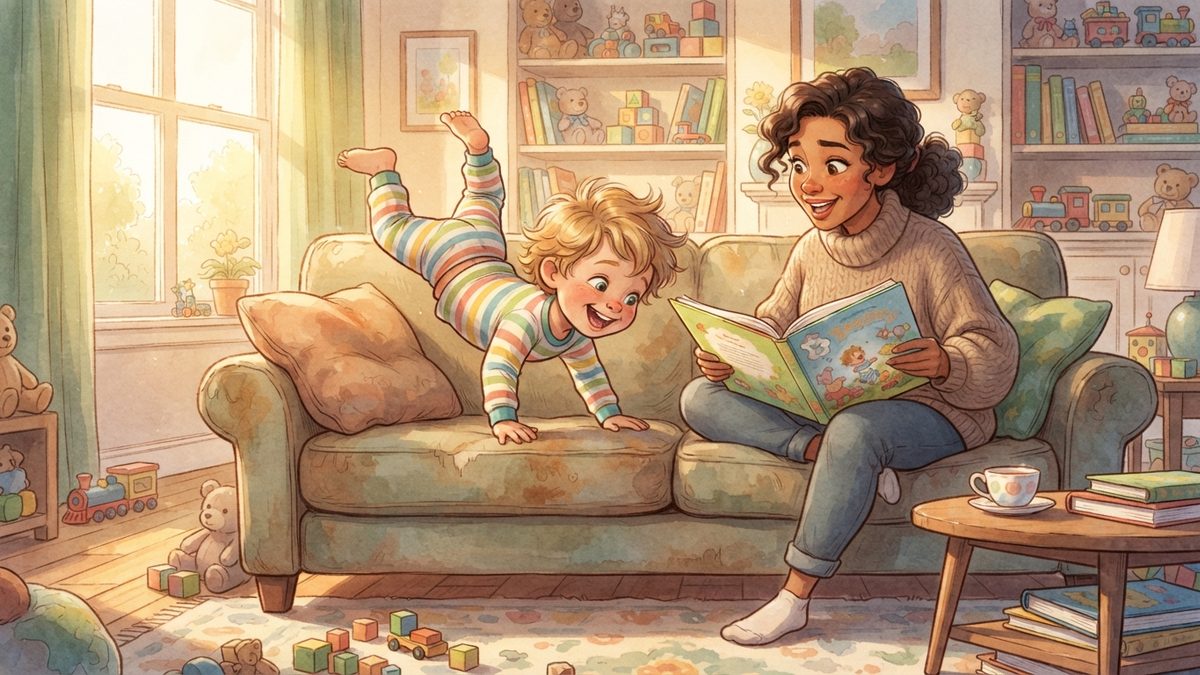
Never use interactive books as a substitute for parental presence. Sit shoulder-to-shoulder on a couch or bed. Rest the tablet on a pillow between you, keeping hands resting together.
Step 3: Use the "PEER" Dialogic Reading Prompt #
The Whitehurst Dialogic Reading method is proven to accelerate expressive language. Use the PEER sequence once or twice per book:
- Prompt: "Look at Kavi swimming—what color is the water turning?"
- Evaluate: Child answers, "Blue!"
- Expand: "Yes! It's deep, shimmering indigo blue because it is twilight."
- Repeat: "Can you say 'indigo'?"
Step 4: Sturdy Closing Ritual #
When the narration concludes, close the flipbook together and place the tablet in a charging dock in another room:
"The story is finished, the screen is sleeping, and now our bodies get to rest. Let's snuggle under the blanket."
[!TIP] Recommended Deep-Dive: If you are exploring this topic, read our clinical guide on 5 Essential Internet Safety Rules for Young Tablet Users for proven scripts and routines.
Discover Calm, Commercial-Free Interactive Stories #
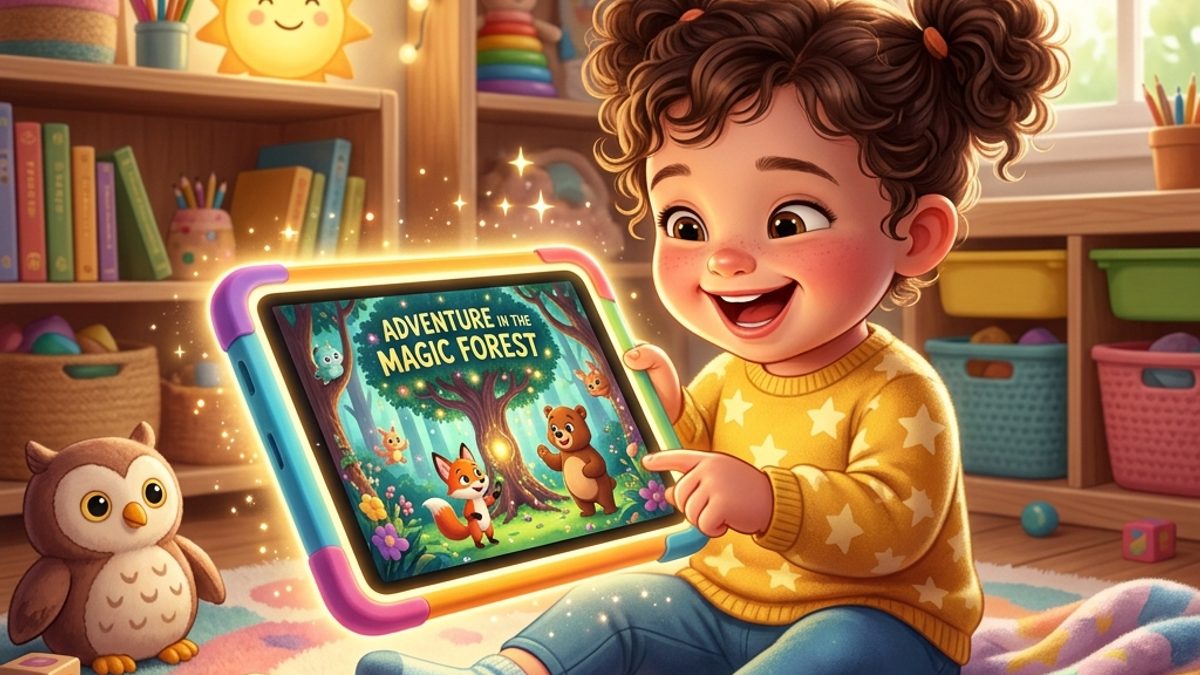
At Fabella, we designed our interactive library specifically to reject hyper-stimulating clickbait. Our 3D flipbooks combine:
- Warm Watercolor Aesthetics: Gentle hand-painted visuals that respect developing vision.
- Warm Human Narration: Calming, expressive voiceovers that model pristine pronunciation and emotional tone.
- Pure Reading Focus: Zero ad pop-ups, zero distracting mini-games, and zero algorithmic dopamine loops.
Experience the joy of interactive reading with your child tonight. Explore the Fabella Interactive Storybook Library for free!