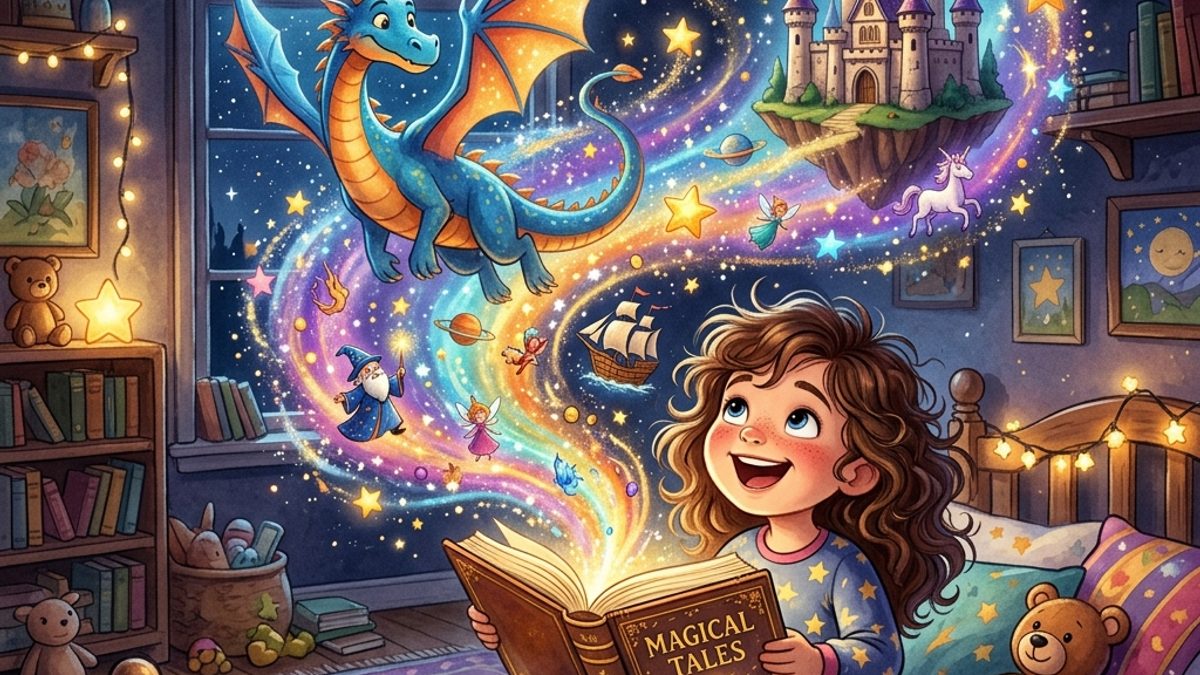
When a four-year-old insists that a cardboard box is a high-speed submarine exploring the Mariana Trench, or that a wooden spoon is a magic wand capable of turning vegetables into chocolate, they are not merely entertaining themselves. They are performing one of the most sophisticated neurological feats of early childhood: symbolic imaginative cognition.
In our data-obsessed culture, parents are often tempted to swap storybooks and open-ended play for phonics flashcards and early academic drills. Yet developmental cognitive neuroscience paints an entirely different picture. Symbolic play and imaginative storytelling are the ultimate developmental gymnasiums for the brain's executive functioning network.
Here is what developmental science reveals about how imagination sculpts the young brain, along with concrete clinical tools to nurture your child's creativity without losing daily structure.
"Play is not frivolous; it is the laboratory where children test emotional hypotheses, synthesize sensory experiences, and build neural pathways of empathy and executive control. Narrative imagination is the bridge to higher-order thinking."
— Dr. Daniel Siegel, Clinical Professor of Psychiatry and Author of The Whole-Brain Child
Higher executive functioning & working memory scores in children engaging in daily imaginative narrative play
vs. peers with high passive media exposure and minimal symbolic play
The Neurobiology of Imagination: How Story Worlds Build the Brain #
When children listen to or act out imaginative stories, brain imaging reveals widespread bilateral activation across the prefrontal cortex, temporal lobes, and limbic system:
- Working Memory & Counterfactual Reasoning: Holding two realities in mind simultaneously—knowing that a blanket is fabric while treating it as a dragon's wing—exercises working memory and cognitive flexibility.
- Theory of Mind (Social Perspective-Taking): When a child steps into the shoes of a frightened rabbit in a dark forest, they practice experiencing an emotional state outside their own immediate physical body. This is the direct neurological root of empathy.
- Emotional Catharsis & Mastery: Children lack the linguistic vocabulary to explain complex anxieties about doctor visits, new siblings, or school transitions. Through fictional characters, they project, test, and master difficult emotional conflicts safely.
Sturdy Warmth: Guiding Imagination with Clear Boundaries #
While imagination is vital, young children can become overwhelmed when fantasy bleeds into behavior—such as pretending to be a superhero who refuses to wear a seatbelt, or insisting that a pretend dinosaur doesn't have to clean up toys.
The authoritative sturdy warmth approach celebrates the child's imaginative world while keeping physical boundaries uncompromised:
| Situation | Permissive (Soft) | Authoritarian (Hard) | Sturdy Warmth (Balanced) |
|---|---|---|---|
| Cleanup Time Resistance | Parent cleans up while child plays spaceship | Shouts, "Stop this nonsense right now or all toys go in the trash!" | Plays along within the boundary: "Captain! This spaceship needs its power modules stored in the hangar before launch!" |
| Safety Limits | Lets child jump off high furniture like a bird | Drags child down angrily with harsh scolding | Empathizes & holds limit: "I see your eagle wings! AND couches are for sitting. Let's fly your eagle across the soft rug." |
| Nighttime Shadows | Promises monsters aren't real, but leaves lights on all night | Dismisses fears: "Big kids don't get scared of silly shadows." | Validates & stays sturdy: "It can feel spooky when shadows look big. You are 100% safe in this room, and I am holding you." |
4 Concrete Ways to Fuel Your Child's Imagination Tonight #
You don't need elaborate props to awaken your child's imaginative capacity. Follow this closed-ended blueprint starting tonight:
Step 1: Trade Rapid-Cut Animation for Rich Narrative Stories #
Rapidly cutting cartoons do the visualizing for the child, leaving the imagination passive. When you read illustrated storybooks or listen to Fabella's immersive narrated tales, the child's brain must construct the soundscapes, emotional tones, and transitions internally.
Step 2: The "What If" Narrative Prompt #
During reading, pause once before a pivotal turn and ask an open inquiry:
- "If you were Maeve right now, what wacky tool would you invent to fix this giant mess?"
- Listen without correcting their logic. Validate every creative twist: "That is brilliant—a magnetic broom powered by giggles!"
Step 3: Build an "Imagination Prop Box" #
Gather three simple household items into a basket: a cardboard paper towel roll, a small silk scarf, and an empty tea tin. Watch how your child transforms them into a spyglass, a royal cape, and a treasure chest. Low-definition toys require high-definition imagination.
Step 4: Transform Bedtime Anxiety with Archetypes #
If your child struggles with night terrors or shadows, anchor them with character strengths. Read stories of gentle courage like The Brave Little Lantern and say:
"Tonight, you have the brave lantern's warm glow right inside your heart. The shadows outside can dance, but your room is guarded and peaceful."
[!TIP] Recommended Deep-Dive: If you are exploring this topic, read our clinical guide on The Science of Dad Roughhousing: Why Rough Play Builds EQ for proven scripts and routines.
Explore the Wonder of Storytelling with Fabella #
Nurturing your child's imagination doesn't require expensive gadgets. It begins with the timeless warmth of storytelling.
Explore our Free Interactive Storybook Library tonight and embark on an unforgettable adventure that will inspire your little dreamer's mind and heart.